Making Sacred Space in the mess of everyday life
Sometimes places of contemplation are pristine, and sometimes you push the crafts out of the way to make one.

Hello friends,
I’ve been figuring out this Substack thing for a couple months now, and just wanted to say a huge thank you to my early day readers. I know some of you have followed my writing over the years in The Banner or Christian Courier, or read my book, and I am grateful to have had your thoughtful support over the years. To those who are newer here, welcome. I’m so glad you’re here.
I recently had the privilege of doing an interview on youTube with Jon Mathieu from Christian Century about my recent article there. Jon is a delightful, compassion person, and I was grateful to unpack a little more about my experience with Teen Mania in our conversation. You can watch that interview here.

Moments of Contemplation (and a literary label I use reluctantly)
Today I’d like to share something I wrote a year ago, before starting Substack, when I couldn’t find a home for a contemplation like this.
I don’t love how the bookselling industry forces content into certain categories, but for lack of a better term, spiritual writing is one of the things I do sometimes, and this is one of those pieces. I know that not all of my readers come from the same religious tradition that I do, and I hope that whatever your perspective, you find permission to create spaces of contemplation and meditation in this piece.
A Stuffy on the Altar
Recently new friends invited us to a party, a sort of casual open mic affair. Before the mic “opened,” we were milling around and enjoying the spread of cheeses and tabbouleh when my husband put his drink down on a sideboard that contained carefully curated items. Overlaid with a cloth, the display held a framed photo of the labyrinth from the cathedral in Chartres, a candle, a set of Bob Ross inspirational cards, a personality typography card game, a crystal, a singing bowl, and other items that seemed to hold sacred meaning.
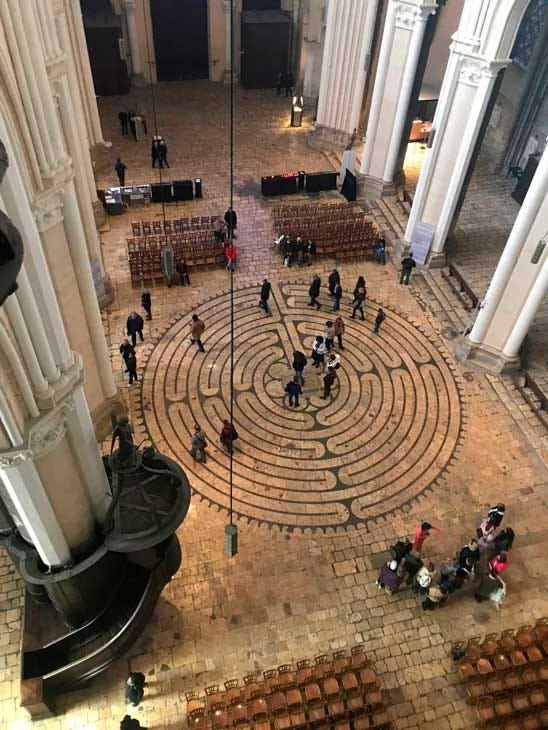
“Maybe don’t put your drink there,” I suggested. He scanned the table as he picked up his beer, and then we had a brief conversation trying to determine whether it was irreverent to casually leave a glass on this special table. Clearly several of the items were meant to be interacted with, so was it okay? Or were these items inviting guests into quiet contemplation? We determined it was safest not to leave the glass there, and soon other guests came by and selected Bob Ross cards that spoke to them: the Mighty Mountain, the Still Lake.
When one of our hosts kicked off the event, she invited us to stop by the altar at the back of the room at some point during the afternoon. I elbowed my husband to say, See—I was right. I know a sacred space when I see one.
“I want to set up an altar somewhere at home,” I told him when we got in the car, full of cheese and the buzz of having met new and interesting people.
“That would quickly become a theme park for Lego people,” he said. I thought back to how Batman and Buzz Lightyear ended up visiting Jesus in the creche at Christmas, the wisemen standing back, waiting for Epiphany, tossing each other disapproving glances.
But perhaps that’s part of the joy of it, I thought. So often we think of sacred space as something that must be entered into with seriousness and quiet, a somber and intense attitude. We think we need a strict distinction between our everyday activities and prayer.
We need those kinds of set apart sanctuaries, where we strip away the many things that distract us in life and step into a space that is designated, relegated as a place where we are immediately reminded of the things that our world convinces us to forget: that we are in the presence of Someone greater than us, that we are creatures, that we are holy, that we are mortal, that we are eternally loved.
But I also need altars that blur the lines, places where the messiness and sacred interweave to make a day-to-day life that has room for contemplation in the middle of hustling. My daily altar consists of me setting up my candle, journal, Bible and mug of tea in the middle of the coffee table. I used to try to clear the table first of all the toys and activities that found their way onto it in throughout the morning as the kids entertained themselves while I made their lunches. I’ve rejected axioms like “Messy house, messy mind” and “Cleanliness is next to godliness,” and still they roll around in my brain convincing me that I need to strive to fix myself up a bit before coming into the presence of the Divine. I forget that I am already there. And isn’t that the purpose of sacred space: to invite us to come as we are, to recognize God around us always, moving in ways we see and don’t see, and to go from there into the pedestrian parts of our lives refreshed with the reminder that the Spirit is still with us?
Doesn’t Jesus use everyday items to teach us about the kingdom of God? A lamp needing oil, missing coins, fishing nets, and other common place objects become vessels to invite us into a deeper understanding of who God is and what God is doing in renewing this world.
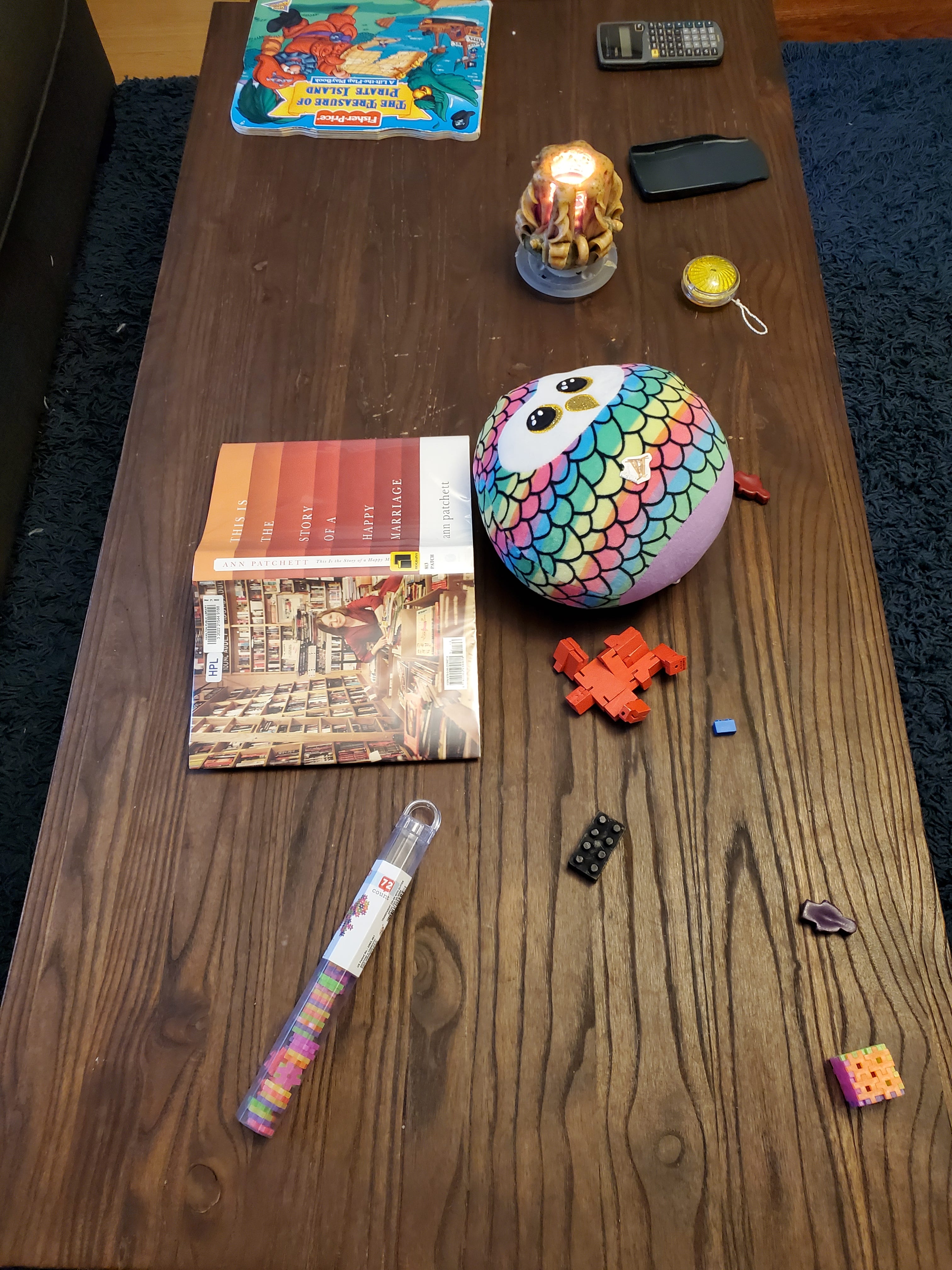
Now I leave the clutter. Here I am reminded that my experience with God is not just in my head, in my thoughts, and on the glorious transmission of ideas through paper. But it is also in the tactile firmness of the blocks that press together, in pressing a stuffed cat into the arms of a sick boy, in feeling the thrill of the anticipated jolt of the yoyo as it reaches the end of its rope. God is here in all of these moments, and grounding myself in these moments at my make-shift coffee table altar reminds me to take that awareness of God’s here-ness with me. As the ordinary elements of Eucharist—a piece of baked flour and water on a plate, fermented grapes in a cup—become endowed with Revelation that I take with me throughout the week, so the stuff of everyday holds reminders of God’s love expressed in my family, work, and friends.
I’ve been practicing Welcoming Prayer, in which we sit in the awareness of God’s presence and welcome whatever emotions come up. In some ways my messy coffee table altar becomes a manifestation of these prayers, where I welcome the mess and the play, the vehicles of imagination and the reminders of the constant buzz of activity in this stage of life, the unrelenting, enchanting curiosity.
The candle casts a glow on the flat face of a plush owl. The Bible sits beside a calculator, still showing the digits of Pi that my child has been trying to memorize. There is a wooden robot, a Lego-shaped crayon, yet another of the twenty rocks that have made their way into my house (the very stones shall cry out). And all of this is sacred, holy, part of an altar that reminds me that God is present in my consecrated time of prayer and the ordinary moments of building a tower with my children, putting crackers in a lunch bag, and maybe eventually putting the toys back in the toy box.